Starting point: Global climate policy must start where it works
If we want to protect the climate effectively and enable sustainable development at the same time, we must think internationally, invest globally and act pragmatically. The fight against climate change will not be won in Europe, but in the Global South – where populations and energy demand are growing rapidly, marginal economic costs are low and nature offers enormous CO₂ sequestration potential. The future viability of our planet will be decided in Africa, Asia and Latin America – not tomorrow, but now.
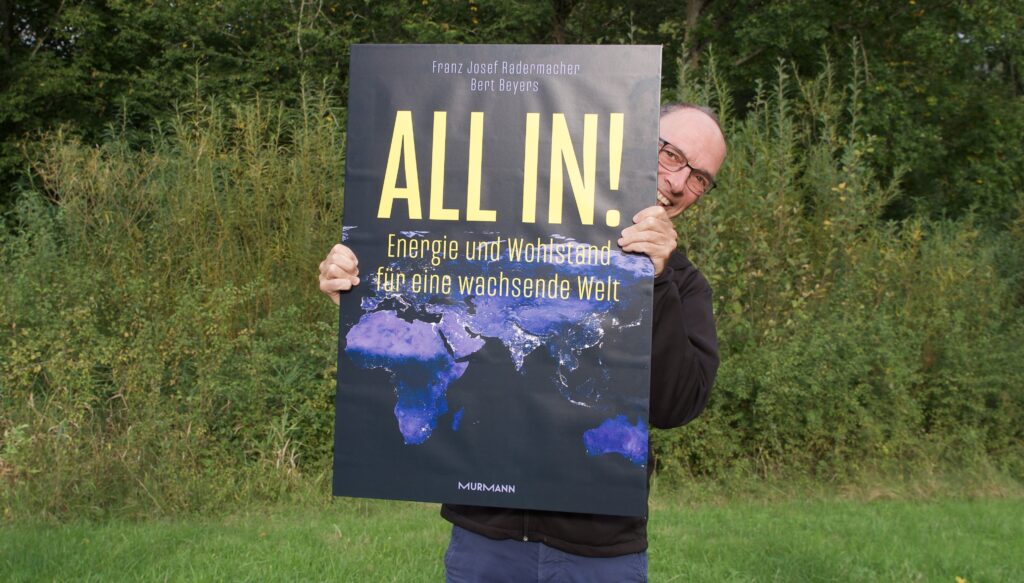
The ALL IN! vision provides a suitable framework: a pragmatic, technology-neutral and global strategy that uses all available levers for CO₂ avoidance and sequestration. What is needed now is a decisive breakthrough in implementation, accompanied by substantial financial flows from international climate partnerships, supported, among other things, by the cooperation mechanisms of Article 6 of the Paris Agreement. This is the only way to effectively align global development goals and climate targets.
Five key conditions for the success of global climate partnerships
a) Financial clout through institutionalised transfers
It is no longer enough to repeat vague promises of funding. Climate partnerships must be equipped with real, reliable and long-term resources if the climate protection goals of the Global South are to become achievable. Industrialised countries must mobilise more than 1 trillion US dollars annually for international climate investments – both public and private, through direct investments, results-based payments and fund models. These funds must not be “handouts,” but payments for real, measurable achievements: CO₂ sequestration through rainforest protection, CO₂ avoidance through energy transition infrastructure, and increased resilience through nature-based solutions. The funds must be managed professionally, in a fiduciary manner and based on facts – in line with the “money for performance” principle outlined by ALL IN! Such payments are an expression of a long-overdue realignment of global responsibility: they are not an act of mercy, but part of a moral and political obligation to share the burden fairly in the global climate regime. Especially in view of growing climate risks, climate investments in the South must also be seen as an obligation within the framework of the long-term climate targets for 2045 or 2050 – not as an option.
b) Comprehensive development of nature-based sink programmes
Nature-based solutions offer the greatest short-term potential for increasing global CO₂ sequestration, with accompanying comprehensive development effects. The North must create the financial framework to leverage this potential in the South in a targeted and large-scale manner. This includes
- the conservation and protection of tropical and boreal forests through satellite-based monitoring and performance-based payments,
- large-scale reforestation of degraded soils with agroforestry use,
- Long-term carbon sequestration through biochar (pyrolysis) and its incorporation into agricultural soils.
These measures are immediately available, scalable and also bring massive co-benefits in terms of biodiversity, jobs and food security.
c) Technology offensive and fair market access for (green) products
International climate partnerships must go beyond sectoral demonstration projects. What is needed is technology- and investment-driven structural change in partner countries, with the following elements:
- Establishment and expansion of local production capacities for green energy technologies (e.g. PV, hydrogen, CCUS)
- Modernisation of electricity, industrial and transport infrastructure to low-emission standards
- Market access for (green) products from the South on global markets (without trade barriers such as supply chain laws and CO2 border adjustment mechanisms).
Without fair market access, the Global South risks being reduced to the role of a raw material supplier, while value creation, innovation and prosperity remain in the industrialised countries. A fair global climate policy must therefore also rethink trade structures and enable prospects for industrial development in the South. Industrialised countries must provide capital and technology, combined with targeted market opening for (climate-friendly) products from the South.
d) Robust cooperation architecture based on Article 6 with system integration into existing certificate markets
Article 6 of the Paris Agreement provides an institutional framework for making international climate partnerships credible and scalable. It is now crucial that it is consistently designed and managed in order to bring the system advantages to bear:
- Article 6.4 must be established as a multilateral gold standard: with harmonised baselines, independent monitoring, digital MRV (monitoring, reporting, verification) systems and public transparency.
- A robust governance structure, especially for bilateral Article 6.2 agreements (e.g. a central registry, uniform methodology systems, transparent accounting).
- full compatibility with existing certificate systems such as the EU ETS, the Voluntary Carbon Market (VCM) or national compensation regimes (e.g. CORSIA),
- Clear rules for the use of international certificates within the framework of national targets, e.g. through earmarking for climate partnerships and additional international financing outside the ETS.
All measures must achieve additional, quantifiable and permanent emission reductions – and directly address the 17 Sustainable Development Goals (SDGs).
A fair Article 6 market is more than a carbon trading system – it is a mechanism for fair access to capital, technology and development opportunities. It can mitigate structural inequality in global climate protection – provided that it is actively used to promote globally balanced development. The long-term goal is a unified, interoperable certificate market that is credible, provides incentives for trading and offers regulatory clarity for public and private actors.
e) Appropriate risk management based on past experience
The structural weaknesses of previous mechanisms – in particular the Clean Development Mechanism (CDM) – must not be repeated. This requires integrative risk management that includes the following elements:
- Project effectiveness assessment: Each project must demonstrate that it goes beyond the business-as-usual scenario – in a quantified, causal and permanent manner.
- Protection against misguided incentives: Methodologies must be designed in such a way that there is no economic incentive to artificially generate or overstate emissions.
- Prevention of market distortion: Transparent pricing, minimum standards for certificates and the avoidance of dumping CO₂ credits are mandatory.
- Quality control by independent validation bodies and digital MRV systems (measurement, reporting, verification) with satellite data and open-access accounting.
- Exclude double counting and reputational risks: All transferred reductions must be clearly assignable in international registries – with exclusive crediting and complete accounting.
Only if risks are controlled, false incentives avoided and standards strictly enforced will the trust needed by the market for international climate protection contributions be established.
Conclusion: If we want global net zero, we must invest globally – now
The ALL IN! strategy shows the way forward: climate protection can only succeed if it is global, technology-neutral and development-oriented. International climate partnerships are not an add-on, but central implementation tools for a climate-neutral world in which 10 billion people can live in prosperity.
The Global South has repeatedly signalled its willingness to make the necessary contributions – CO₂ sequestration, emissions reduction, energy transition. What is still lacking is decisive action from the North: financing, technology and partnership on equal terms. Article 6 offers a tool that must be backed by stringent governance, strong financing and clear political objectives.
The Global North – and countries such as China and the major oil exporters – must be clear that much greater contributions are needed than those necessary to achieve their own climate neutrality. This is because the climate targets of developing countries are linked to financing demands on wealthy countries.
This is particularly true for Germany: all of this can be achieved at a lower cost than is currently being spent on climate protection. At this point, the current inefficiency in the use of funds seems like an invitation to finally do the right thing and, through international cooperation, become a true role model in climate protection, which the world so urgently needs.
Only if we act now in this spirit can we create a world in which climate protection and development can succeed. The additional added value for Germany is that the negative consequences of the current course – such as the far too expensive energy transition and the associated decline in industrial competitiveness – can be significantly mitigated.
ChatGPT (model version July 2025) was used to support the structuring and linguistic formulation of this text. All content has been editorially reviewed and is subject to editorial responsibility.